Guides: building with AI and vibe coding

Practical write-ups on building with AI in 2026 — what actually speeds up, where the workflow breaks, and how to choose an open-source project worth building your system on.

AI Project Ideas for 2026: What Is Actually Worth Building

The best AI project ideas in 2026 sit where a real workflow is still manual and an open-source component already solves the hard part. Start from an existing repository, not a blank page: it gives you a working architecture, a readable licence and known edge cases.

9 min · updated 2026-08-01

Building Systems With AI: From Prompt to Production

Building systems with AI means treating the model as a fast implementer, not an architect. You write the specification, define the boundaries it may touch, and gate every change behind tests. Generation is the cheap step; specification and verification are the work.

8 min · updated 2026-08-01

Open-Source AI Agents: How to Pick One to Build On

Choosing an open-source AI agent to build on comes down to four checks: a licence that permits your commercial plan, an architecture you can actually read, recent and non-solo maintenance, and a tool interface you can extend without forking. Stars answer none of these.

7 min · updated 2026-08-01

MCP Servers Explained: What They Are and What to Build

An MCP server exposes a system's data and actions over the Model Context Protocol, so any compatible AI client can use it without a custom integration. It is the difference between building one connector per assistant and building one connector, once.

7 min · updated 2026-08-01

Agentic Engineering: What Replaced Vibe Coding in 2026

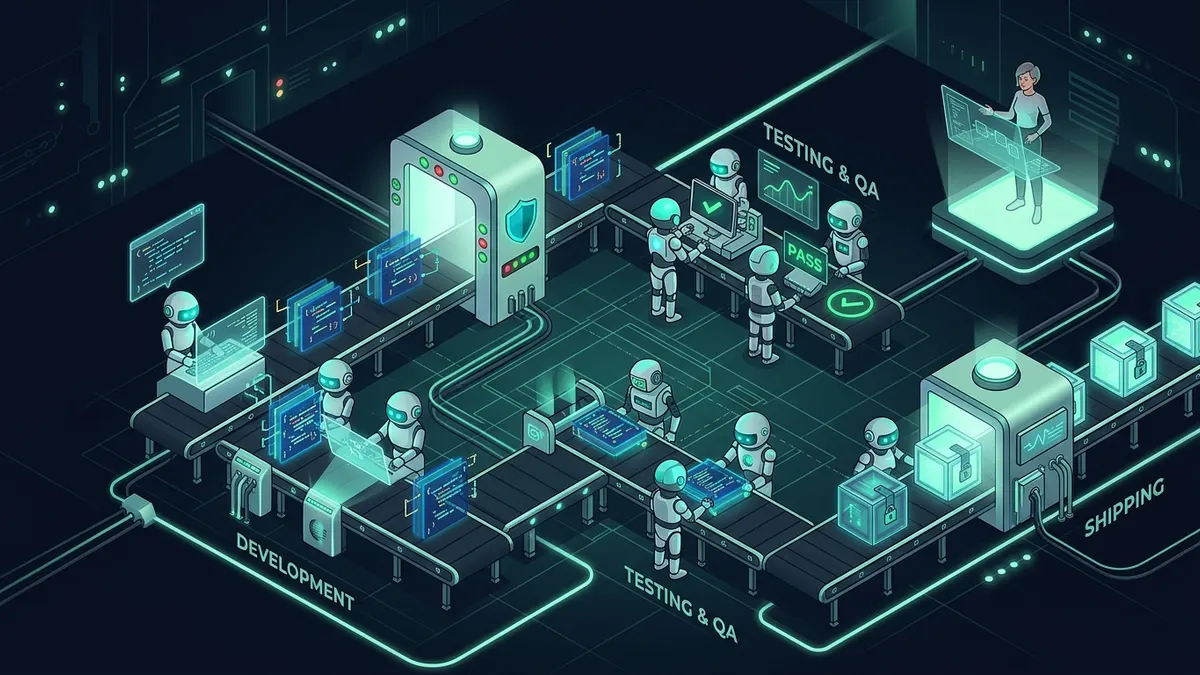
Agentic engineering is the discipline of building software with AI agents that plan, write, test and ship code under structured human oversight. It replaces the improvised prompting of vibe coding with specs, gates and orchestration — repeatable workflows instead of lucky sessions.

8 min · updated 2026-08-23

Spec-Driven Development in 2026: The Workflow and the Tools

Spec-driven development means writing a reviewed specification before an AI agent touches code: what changes, which files it may touch, and which tests must pass. The agent implements against that contract. It emerged in 2025 as the fix for AI code that drifts from intent.

8 min · updated 2026-08-23

AI-Generated Code Security in 2026: The Data and the Defenses

AI-generated code is not secure by default: roughly 44% of code-generation tasks introduce a vulnerability, and model security performance has stagnated while adoption exploded. Safe use means review gates, scanning, least-privilege credentials and tests — not trusting the output.

9 min · updated 2026-08-23

Open Source AI Statistics 2026: Adoption, Agents, MCP and Security

In 2026, about 92% of US developers use AI coding tools daily while only 29% trust the output; roughly 42% of all code is AI-generated or assisted; the largest MCP registry lists over 72,000 servers. Below: sourced industry figures plus original data from 491 hand-analysed open-source projects.

7 min · updated 2026-08-23

Vibe Coding Starter Kits and Templates: What to Build From in 2026

A vibe coding starter kit is a repository prepared for AI-assisted development: a working stack, strict types, a test suite and agent instructions (a CLAUDE.md or Cursor rules file) already in place. Starting from one beats a blank prompt because the model inherits structure instead of inventing it.

8 min · updated 2026-08-29

GitHub Boilerplates and Starter Templates: How to Choose in 2026

The best GitHub boilerplates in 2026 are template repositories with recent commits, a permissive licence, strict typing and CI already wired in. Judge maintenance and the realism of the auth and payment code — star counts measure history, not health.

7 min · updated 2026-08-29

Open-Source SaaS Boilerplates in 2026: Free, Production-Ready Options Compared

A SaaS boilerplate ships the undifferentiated parts of a subscription product — auth, billing, teams, email — already working. The strongest free options in 2026 are open source: Vercel's Next.js SaaS Starter, BoxyHQ's enterprise kit, Wasp's Open SaaS, and per-framework equivalents for Django, Laravel and SvelteKit.

9 min · updated 2026-08-29

Next.js Boilerplates and Starter Templates: The 2026 Shortlist

The shortlist is short: ixartz's Next.js Boilerplate as a strict general-purpose base, create-t3-app for a typed full stack, Vercel's SaaS Starter or BoxyHQ for subscription products, next-forge for a production monorepo, and the official Supabase starter when Supabase is your backend.

8 min · updated 2026-08-29

AI App Builders in 2026: From Prompt to App — and Who Owns the Result

An AI app builder turns a natural-language description into a working web app — UI, backend and hosting included. Lovable, Bolt, v0 and Replit dominate the hosted category; open-source alternatives such as Dyad and bolt.diy generate the same way but leave you a repository you own.

8 min · updated 2026-08-29
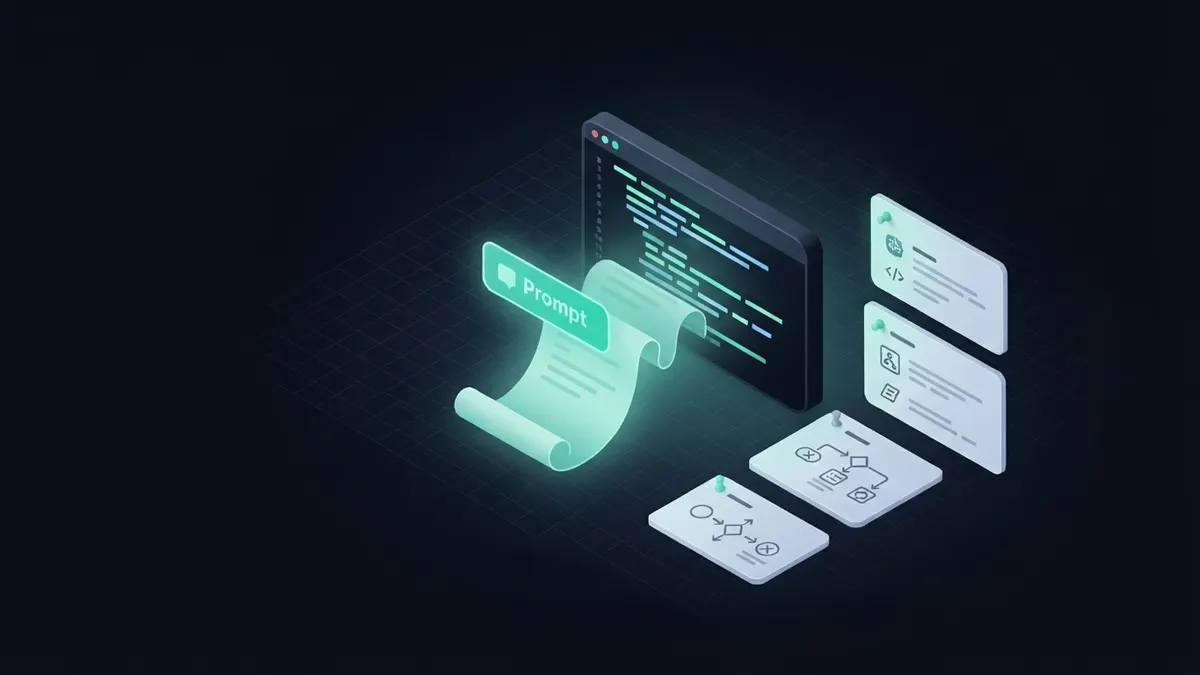
Vibe Coding Prompts, Cursor Rules and Claude Code Project Templates

Good vibe coding prompts read like specifications: goal, constraints, files the agent may touch, and how to verify the result. Persistent project instructions — Cursor rules or a CLAUDE.md — outperform one-off clever prompts because they apply to every future request automatically.

7 min · updated 2026-08-29

Open-source alternatives

Open Source Typeform Alternatives: Formbricks, OpnForm and HeyForm

Formbricks, OpnForm and HeyForm are the best-known open source Typeform alternatives. Formbricks focuses on surveys and in-app feedback, OpnForm on fast no-code forms, and HeyForm on conversational, one-question-at-a-time forms. All can be self-hosted so responses stay in your own database.

7 min · 2026-09-30

Open source GitHub Copilot alternatives: Tabby, Continue and local models

For open source Copilot-style autocomplete, run Tabby as a self-hosted code completion server for your team, or use the Continue extension connected to a local runtime such as Ollama serving a code model. Both keep code on your infrastructure and work in VS Code and JetBrains editors.

6 min · 2026-09-30

Open Source Retool Alternatives: Appsmith, ToolJet and Budibase

Appsmith, ToolJet and Budibase are the leading open source Retool alternatives. All three let you drag widgets onto a canvas, bind them to databases and APIs, and self-host with Docker. Appsmith suits JavaScript-heavy apps, ToolJet broad integrations, and Budibase form and workflow apps with a built-in database.

7 min · 2026-09-28

Open source Cursor alternatives: Continue, Void, Zed, Aider and Cline

Open source Cursor alternatives come in three shapes: extensions for your existing editor (Continue, Cline), full AI-first editors (Zed, Void) and terminal coding agents (Aider). All let you bring your own model, including local ones, so you control cost and where your code is sent.

6 min · 2026-09-28

Open Source Postman Alternatives: Hoppscotch, Bruno and Insomnia Compared

The main open source Postman alternatives are Bruno (offline desktop client that stores collections as plain files in git), Hoppscotch (fast web-based client you can self-host) and Insomnia (desktop client from Kong with local and git storage options). Pick by where you want collections to live.

7 min · 2026-09-28

Open source Zapier alternatives: n8n, Activepieces, Windmill and Huginn

The strongest open source Zapier alternatives are n8n for visual workflows with code escape hatches, Activepieces for a Zapier-like builder with a permissive core, Windmill for script-first internal automation, Huginn for self-hosted monitoring agents, and Node-RED for event and IoT flows. All can be self-hosted.

6 min · 2026-09-28

Open source ChatGPT alternatives: self-hosted chat UIs plus open models

The practical open source ChatGPT alternative is two layers: a self-hosted chat interface such as Open WebUI, LibreChat or LobeChat, and a model runtime such as Ollama, llama.cpp or vLLM serving open-weight models like Llama, Mistral, Qwen or DeepSeek. Desktop apps like Jan bundle both.

6 min · 2026-09-28

Best open-source tools

Best open source LLM fine-tuning tools

Unsloth is the fastest route to LoRA and QLoRA fine-tuning on a single GPU. Axolotl suits config-driven, repeatable training runs, TRL gives low-level control including preference tuning, and LLaMA-Factory offers a web UI across many model families. All build on the Hugging Face and PyTorch ecosystem.

7 min · 2026-09-30

The Best MCP Servers for Developers in 2026

Start with five: a filesystem server for scoped file access, the GitHub server for issues and pull requests, a Postgres server for read-only queries, Playwright MCP for browser testing, and a docs server such as Context7 for current library documentation. Add others only when a task demands them.

7 min · 2026-09-30

Best open source AI gateways and LLM routers

LiteLLM is the most common open source AI gateway, exposing many providers behind one OpenAI-compatible API with keys, budgets and fallbacks. Portkey’s gateway is a lightweight TypeScript alternative. Teams already on Kong or Envoy can add AI plugins instead of running a separate proxy.

7 min · 2026-09-28

The Best Open Source AI Agent Frameworks in 2026

LangGraph is the strongest choice for controllable, stateful agents; CrewAI is fastest for role-based multi-agent prototypes; PydanticAI suits typed Python services; smolagents is the minimal option; Mastra leads for TypeScript. AutoGen and AG2 fit conversational multi-agent research.

6 min · 2026-09-28

Best open source LLM evaluation tools

Use promptfoo for prompt and regression testing in CI, DeepEval for pytest-style assertions on LLM apps, Ragas for measuring RAG retrieval and faithfulness, and lm-evaluation-harness for benchmarking models themselves. Most teams combine an app-level tool with a small, hand-labelled test set.

7 min · 2026-09-28

The Best Open Source RAG Frameworks in 2026

LlamaIndex and Haystack are the strongest code-first RAG frameworks, LangChain is the broadest ecosystem, and RAGFlow or Dify suit teams that want a ready UI. Pick by how much control you need over parsing, retrieval and evaluation, not by feature lists.

7 min · 2026-09-28

Best open source web scrapers for LLMs

For LLM and RAG pipelines, Crawl4AI and Firecrawl are the strongest open source picks because they return clean markdown and render JavaScript. Scrapy remains best for large, structured crawls, Playwright for interactive pages, and Trafilatura for fast article text extraction without a browser.

7 min · 2026-09-28

The Best Open Source LLMs to Self-Host in 2026

For most teams the strongest self-hosted picks are the Qwen, Llama, Mistral, Gemma, DeepSeek and gpt-oss families. Choose by licence first, then by the largest size your GPU memory holds at 4-bit or 8-bit quantization, then test on your own prompts.

7 min · 2026-09-28

How-to guides

How to Build an AI Agent with Tool Calling from Scratch

An agent is a loop: send the conversation and tool definitions to the model, execute any tool calls it returns, append the results, and repeat until it answers without calling a tool or hits a step limit. Most of the real work is tool design, error messages, limits and logging.

6 min · 2026-09-29

How to build an MCP server in TypeScript

Create a Node project, install @modelcontextprotocol/sdk and zod, create an McpServer, register tools with typed input schemas, and connect a StdioServerTransport. Test it with the MCP Inspector, then register the built script in a client such as Claude Code or Cursor.

7 min · 2026-09-29

How to Build a Voice AI Agent with Open Source

A voice AI agent chains voice activity detection, speech-to-text, an LLM and text-to-speech over a real-time transport. Use a framework such as Pipecat or LiveKit Agents to handle streaming and interruptions, stream every stage, and design for turn-taking and latency before you tune the prompt.

6 min · 2026-09-28

How to build a RAG chatbot over your documents

Parse your documents to clean text, split them into overlapping chunks, embed each chunk and store it in a vector database. At question time, embed the query, retrieve the top matching chunks, and ask an LLM to answer only from them with citations. Then evaluate retrieval on real questions.

7 min · 2026-09-28

How to Build an AI Customer Support Bot with Open Source

Index your help center and past resolved tickets, answer with retrieval-augmented generation that cites sources, give the bot a few narrow tools such as order lookup, and route anything uncertain, angry or account-changing to a human inside an open-source helpdesk. Measure deflection and wrong-answer rate, not just volume.

6 min · 2026-09-28

How to run an LLM locally (Ollama, llama.cpp, LM Studio) step by step

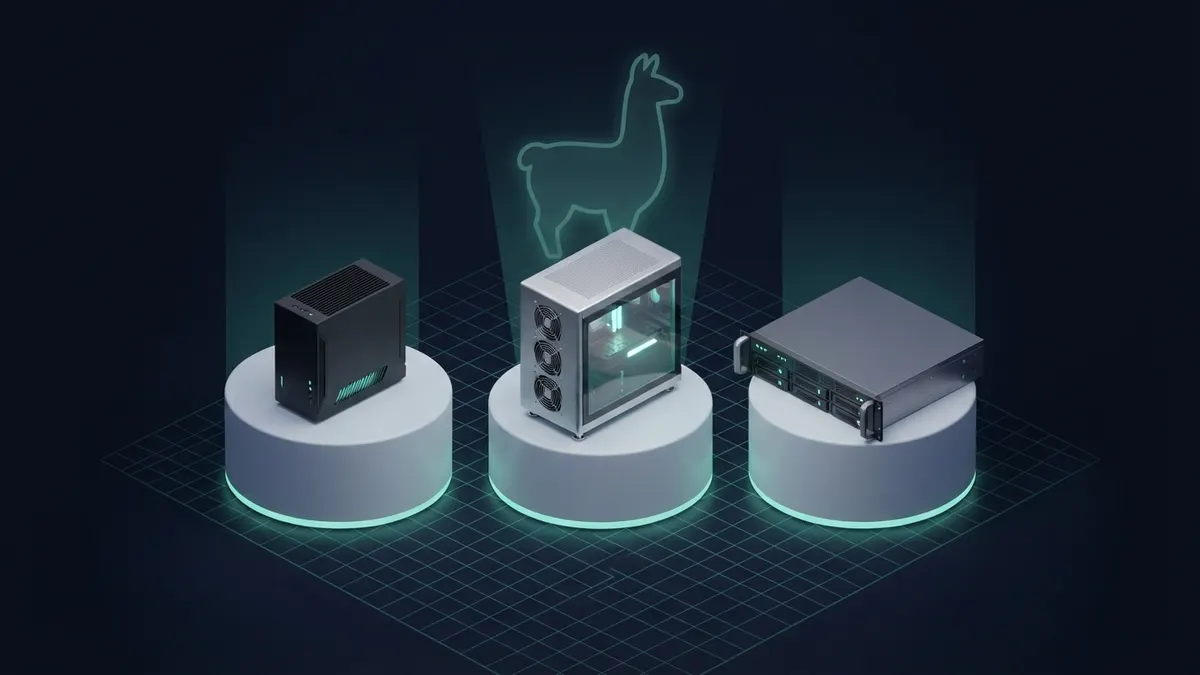
Install Ollama, run “ollama run” with a small model such as a 3B–8B instruct model, and call its local API on port 11434. For more control use llama.cpp with a quantized GGUF file; for a desktop GUI use LM Studio. Size the model to your RAM or VRAM first.

7 min · 2026-09-28

Comparisons

vLLM vs TGI vs Ollama: which should serve your open-source models?

Use Ollama for local development, laptops and single-user tools. Use vLLM for production GPU serving with many concurrent users, thanks to continuous batching and efficient KV-cache memory. Consider TGI mainly if you already run Hugging Face’s stack, and check its current maintenance status first.

7 min · 2026-09-29

LangChain vs LlamaIndex: which framework should you build on?

Choose LlamaIndex when your app is mostly about ingesting, indexing and querying your own data; choose LangChain, usually with LangGraph, when you need broad integrations and orchestration of tools and agents. Both are MIT-licensed Python and TypeScript frameworks, and many teams use them together.

7 min · 2026-09-29

Coolify vs Dokku vs CapRover: which self-hosted PaaS should you run?

Pick Dokku if you want a tiny, git-push Heroku clone on one server and are happy in the terminal. Pick Coolify if you want a modern web dashboard, many servers and one-click databases. Pick CapRover if you want a simple UI on Docker Swarm with a large one-click app list.

7 min · 2026-09-28

What to build

Open source AI tools and product ideas for e-commerce

For e-commerce, open-source AI works best on catalog enrichment, semantic search, support triage and product imagery. Combine a store platform such as Medusa, Saleor or WooCommerce with Qdrant or Meilisearch, an LLM runtime and image tools like rembg, and sell the result to merchants or agencies as a focused add-on.

7 min · 2026-09-29

AI automation services an agency can sell, built on open source

An AI automation agency sells repeatable outcomes, not hours: lead intake, document processing, support triage, reporting. Build each offer on open-source parts such as n8n, Ollama, whisper.cpp and Qdrant, package it with a fixed scope and a maintenance retainer, and keep client data on infrastructure you control.

7 min · 2026-09-28

AI micro-SaaS ideas you can build on open source

The best AI micro-SaaS ideas wrap a narrow, repeated job for one type of buyer around proven open-source parts: an LLM runtime, OCR or speech-to-text, a vector store and a workflow engine. Your value is the workflow, the data handling and the niche, not the model.

7 min · 2026-09-28

Building a business on open source

The Open Core Business Model Explained, With Examples

Open core means the main product is open source, while a company sells proprietary features, usually for larger organizations: single sign-on, audit logs, advanced permissions, compliance and support. GitLab is a well-known example, with a free community edition and paid enterprise tiers.

7 min · 2026-09-30

The Cost of Running an AI SaaS: Infrastructure Line by Line

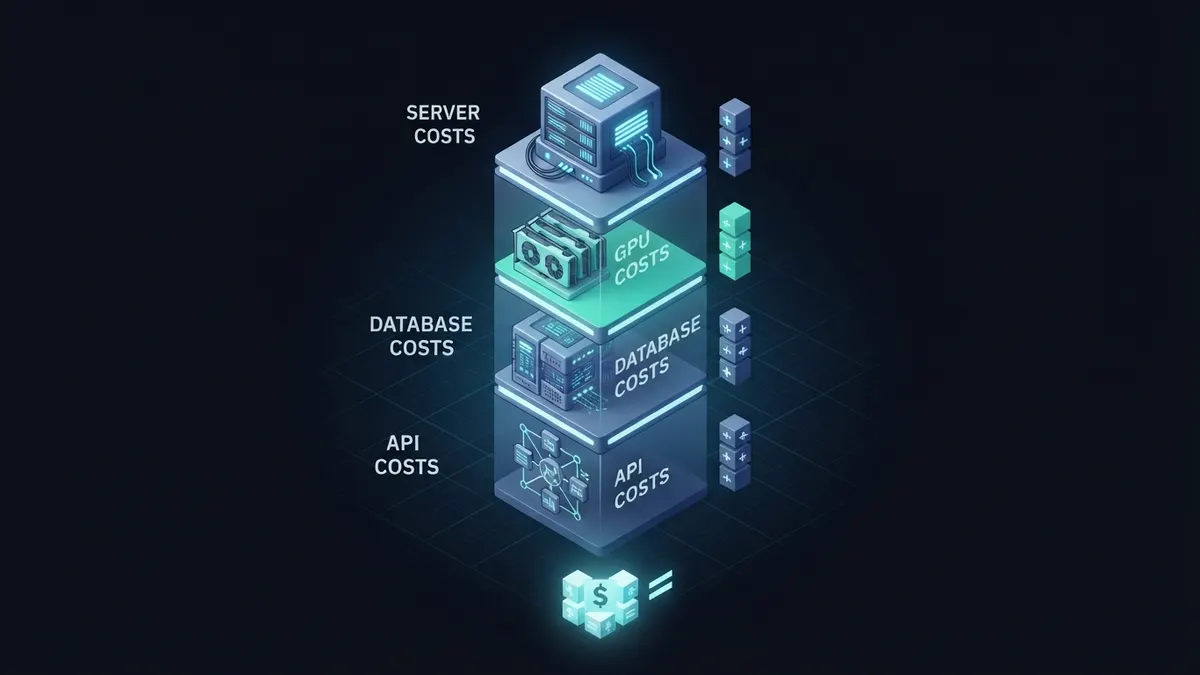
Running an AI SaaS costs a mix of fixed and variable lines: model inference, embeddings and vector storage scale with usage, while hosting, database, observability, email and tooling are mostly fixed. Estimate each line from cost per user action multiplied by expected volume, then add a safety margin.

7 min · 2026-09-28

How to Price an AI SaaS: Usage, Seats, Credits and Hybrids

Price an AI SaaS by anchoring on the value unit customers recognize, then protecting margin against variable model costs. Most teams land on a hybrid: a base subscription with seats or a platform fee, an included allowance of usage or credits, and metered overage for heavy users.

7 min · 2026-09-28

Open Source Due Diligence Checklist Before Building a Product on a Repository

Before building a product on an open-source repository, check the licence and its commercial terms, maintainer activity and governance, security history, dependency health, code quality and tests, documentation, and your exit plan if the project stalls or changes licence. Record findings and decide explicitly.

7 min · 2026-09-28

Open-source project collections

Analysed projects grouped by what you can build with them.

Browse the full catalog